
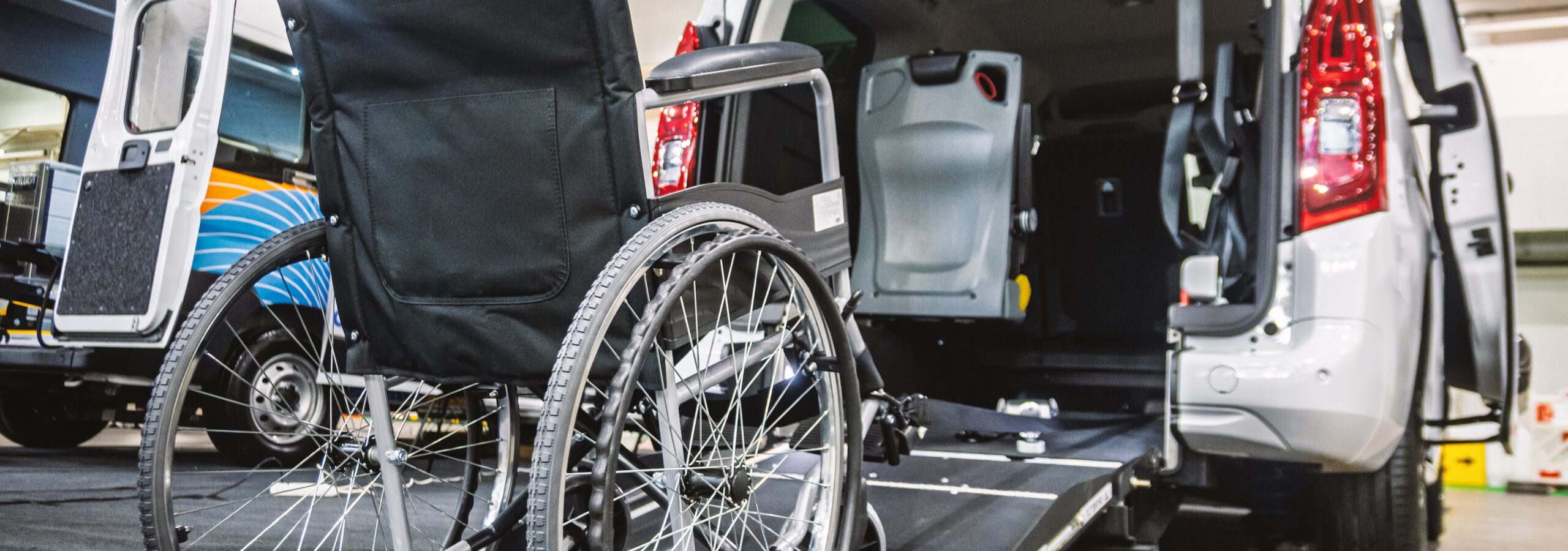
What Is Kneeling Suspension in Mobility Vans?
Kneeling suspension is a feature on wheelchair-accessible vehicles that temporarily lowers the vehicle while parked, reducing the ramp height, then raises it back to normal ride height for driving.
Getting a wheelchair into a van comes down to closing the gap between the ground and the vehicle floor. The bigger the gap, the steeper the ramp has to be, and the harder it is for the rider or the person pushing to climb. There is more than one way to shrink it. Some solutions permanently change the vehicle’s structure. Kneeling suspension does it on demand, only when the van is stopped and passengers need to board or exit.
How Kneeling Suspension Works
When the driver puts the van in park and deploys the ramp, the kneeling system lowers the rear of the vehicle a few inches. That drop reduces the height the ramp must span, making the ramp angle shallower. Once the ramp is stowed and the van is put back into drive, the rear suspension raises the vehicle to its normal ride height.
How the lowering is performed depends on the vehicle. On many minivan conversions, an electric kneeling module uses a kneel chain connected to the rear suspension to lower the body.
Two controls appear on almost every spec sheet for a van with this feature:
- On and off kneeling switch. This lets the operator turn the kneeling feature on or off. With it on, the van kneels automatically as part of the ramp cycle. With it off, the van stays at full height, which is useful when parked beside a tall curb that the lowered body or ramp could contact.
- Out-of-park kneeling override. Kneeling systems are designed to work only while the transmission is in park. The override is the safety function built around that rule. If the van is shifted out of park while it is still lowered, the system cancels the kneel and raises the vehicle to normal ride height, so the van is never driven in a lowered position where it could scrape or damage the underside.
Kneeling Suspension Versus a Lowered Floor
A lowered floor conversion and kneeling suspension both reduce the distance between the ground and the vehicle floor, but they do it in very different ways.
A lowered floor is permanent and structural. The low entry height is always there, and so is the reduced ground clearance, which is why steep driveways and speed bumps require extra care in a lowered-floor van.
Kneeling is temporary and on demand. The van drops only while it is parked for loading, then returns to normal ride height before it moves. The extra drop costs nothing in road ground clearance because the van is never lowered while being driven.
That makes the two features complements rather than alternatives. The lowered floor does most of the work of reducing entry height, and kneeling further reduces the ramp angle at the exact moment it matters. Many conversions carry both, including models from BraunAbility. When you look at wheelchair accessible vans, check the conversion specs for a kneeling switch alongside the lowered floor.
When Kneeling Makes the Most Difference
A kneeling van is most useful anywhere the approach works against a fixed ramp. Common examples include:
- Steep or angled driveways
- High curbs that raise or tilt the landing point
- Sloped parking spaces where the ground falls away from the van
The underlying idea is a ramp angle. A ramp has a fixed length, so the higher the floor sits above the ground, the steeper the ramp has to be to reach it. A steeper angle takes more effort to climb, puts more strain on whoever is pushing, and raises the risk of a chair tipping back or rolling. Reducing the rise flattens the angle, and a shallower ramp is easier and safer to push a chair up. A lowered floor and kneeling suspension exist for the same reason of bringing the angle down.
The riders who feel the difference most are people using heavier power chairs, people who self-propel, and caregivers pushing a manual chair up the ramp.
Looking After a Kneeling System
A kneeling system is simple to maintain, but check it if something seems off. Signs of a problem include:
- Grinding or unusual noise when the van lowers or rises
- Hesitation or a slow cycle when kneeling or rising
- The van sitting unevenly or not returning to normal ride height
Routine attention is light. The kneel chain needs lubrication, and the kneel cycle should be checked for smooth operation. Both are covered in our wheelchair van inspection checklist, along with the rest of the ramp and conversion checks worth doing on a regular schedule.
Frequently Asked Questions
Does kneeling suspension replace a lowered floor conversion?
No. Kneeling suspension works alongside a lowered floor, not instead of one. The lowered floor provides a permanently lower entry, and kneeling lowers the vehicle further while it is parked to make the ramp angle gentler.
Can you drive the van while it is kneeling?
No. The kneeling system is designed to operate only while the van is in park. If you shift the van out of park while it’s lowered, it raises back to normal ride height, so you don’t drive it in the lowered position.
Does kneeling suspension need regular maintenance?
Yes, but not much. Lubricate the kneel chain and check the kneel cycle for smooth operation as part of routine inspections. Address any grinding, hesitation, or uneven ride height promptly.
Do all wheelchair accessible vans have kneeling suspension?
No. Kneeling is a conversion feature, not standard on every wheelchair-accessible van. Look for an on/off kneeling switch in the conversion specs to confirm a vehicle has kneeling suspension.
Get Expert Guidance From Southern Bus and Mobility
Kneeling suspension is one small feature, but it can make every trip easier to start and finish. Southern Bus and Mobility works with conversion manufacturers every day, and our team can help you choose features that fit how you travel, from lowered floors and kneeling systems to ramps and securement. Whether you are comparing vehicles, have questions about a specific conversion, or need help keeping your current van in top shape, reach out to Southern Bus and Mobility for guidance you can trust.