
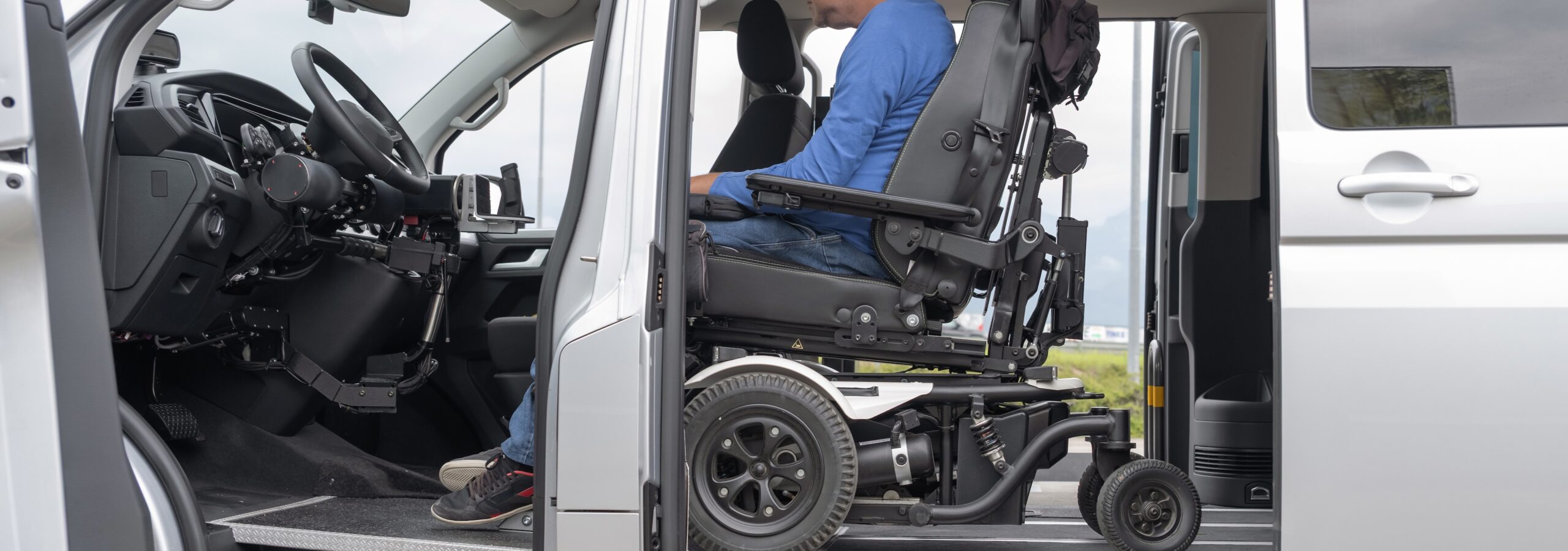
4-Point Tie-Down vs Docking Systems: What’s the Difference?
Wheelchair tie-downs and wheelchair docking systems both secure a wheelchair inside a vehicle, but they work differently and suit different riders. Tie-downs use four straps that work with almost any wheelchair, while docking systems use a locking base that lets many users secure themselves without assistance. In this guide, we’ll cover how each wheelchair securement system works, who each one suits, and how to decide between them.
How 4-Point Tie-Downs Work
A 4-point tie-down system uses four straps, one at each corner of the wheelchair, anchoring the chair to L-track or floor pockets built into the vehicle floor. Because the straps only hold the chair, a separate lap and shoulder belt provides occupant restraint for the rider. This is the same system we walk through in more detail in our guide to transporting an electric wheelchair, so we’ll keep the mechanics brief here and focus on what matters when you’re comparing options.
- Tie-downs fit virtually any wheelchair, manual or power, which is why they remain the most universal type of wheelchair securement on the market.
- They’re generally the most affordable wheelchair restraint system to install, service, and replace if a strap wears out.
- Tie-downs are the standard in buses and larger vehicles. Federal safety rules for school buses have required forward-facing wheelchair stations with four-point, strap-type tie-downs and lap/shoulder belt restraints since the early 1990s, and multi-passenger vehicles still lean on tie-downs because the one system works with whichever wheelchair shows up.
- Fastening and releasing straps usually takes a second person. Reaching all four corners and tensioning each strap correctly isn’t a one-handed job for most riders, so drivers or caregivers typically operate tie-downs rather than the wheelchair user.
- Wheelchair tie-downs come in many types, from simple strap-and-hook setups to self-tensioning retractors, such as the Q-Straint QRT MAX carried at Southern Bus, which lock and tension automatically once the hook is attached and keep day-to-day maintenance easy.
For vans specifically, wheelchair tie-downs are almost always installed along L-track running the length of the floor rather than fixed floor pockets, which lets the securement points shift depending on where the wheelchair needs to sit and makes it easier to fit multiple wheelchair sizes in the same vehicle.
How Docking Systems Work
A wheelchair docking system works differently. A bracket fitted to the underside of the wheelchair engages a docking base bolted to the vehicle floor. The user simply rolls into position, and the docking base automatically locks onto the bracket, making entry and exit easy without assistance. A release button lets them exit independently, and most systems include a manual release as an emergency backup.
Three things set docking systems apart from straps:
- Independence. Because the chair locks into the docking base on its own, most users can secure themselves without waiting on a caregiver or driver.
- Speed. Docking takes seconds, not the several minutes it typically takes to fasten and tension four straps correctly.
- Driving from the wheelchair. Docking lets many people drive a vehicle from their wheelchair rather than transferring to a vehicle seat, since systems like EZ Lock are built to work in the driver’s position as well as passenger seating. This also means riders stay in the same wheelchair they’re already comfortable in, rather than transferring to a vehicle seat and back. Many docking bases also include electronic status monitoring, so the driver gets a clear signal that the chair is fully locked before the vehicle moves.
Because the bracket is mounted to one specific wheelchair, the fit itself is the trade-off. A docking system isn’t transferable between chairs without first refitting the bracket to the new chair. This matters for anyone who swaps wheelchairs for repairs, growth, or a new prescription. It’s also worth checking compatibility before you buy, since not every power or manual wheelchair frame accepts a docking bracket in the same way, and a mobility specialist can confirm fit before the equipment is installed.
Which System Suits Which Rider
The right wheelchair restraint system depends on how the vehicle is used and how often the rider’s wheelchair changes, not on which system is “better.”
4-point tie-downs tend to suit:
- Multi-passenger vehicles, like buses, shuttles, and paratransit vans, where several different wheelchairs may need to be secured on different trips
- Riders who change chairs, or who borrow, rent, or repair their wheelchair from time to time
- Shared or fleet vehicles, where the driver can’t predict in advance which wheelchair will need to be secured
- Cost-conscious buyers who want a reliable wheelchair securement system without the added expense of a chair-specific bracket
Docking systems tend to suit:
- Daily users who rely on the same wheelchair every time they travel
- Anyone who wants to secure themselves without waiting on a caregiver or driver to fasten straps
- Anyone who intends to drive their vehicle from their wheelchair rather than transferring to a vehicle seat
Both systems meet the same crash-test standards when installed and used correctly, so the choice isn’t a safety ranking. Reputable tie-down and docking products on the market, including the systems Southern Bus installs, are crash-tested to the industry’s 30 mph/20G benchmark for wheelchair securement. The difference between the two systems is in how they fit into a rider’s daily routine, not in how well they protect the rider.
If you’re deciding for someone else, such as a family member or a client in your care, it helps to think through how the vehicle gets used day to day rather than just the rider’s current wheelchair. A single-passenger vehicle used exclusively by one daily wheelchair user is a strong candidate for docking. A vehicle that regularly carries different riders, or a wheelchair that’s likely to be replaced or repaired within the next few years, points toward a tie-down setup instead. When it’s unclear which situation applies, talk to a mobility specialist about both options for your specific wheelchair and vehicle before committing to one system.
What This Means When You Rent
Rental vehicles typically use 4-point tie-downs rather than docking systems, because tie-downs work with any wheelchair while a docking bracket fits only one specific chair. If you’re planning to rent a wheelchair-accessible vehicle, confirm what type of wheelchair securement the vehicle has and whether your chair is compatible before you book. Browse through our wheelchair accessible vehicle rentals to see what’s currently available.
How Southern Bus & Mobility Can Help
Southern Bus & Mobility fits and services both 4-point tie-downs and docking systems, including EZ Lock and INQLINE, so you don’t have to guess which one is right for your vehicle. Our team can walk through your wheelchair, your vehicle, and how you actually use it, and help you find the wheelchair restraints that fit. If you’re still weighing your options, reach out, and we’ll help you compare them side by side.
Frequently Asked Questions
What is a 4-point tie-down wheelchair system?
A 4-point tie-down secures a wheelchair using four straps that run to L-track or floor pockets in the vehicle floor, while a separate lap and shoulder belt secures the rider. It’s the most widely used method of securing a wheelchair in a vehicle because it works with almost any wheelchair, manual or power.
What is a wheelchair docking system?
Instead of straps, a bracket under the wheelchair clicks into a base bolted to the vehicle floor as the user rolls into place, letting many riders secure themselves without a caregiver’s or driver’s help.
Is a docking system safer than a 4-point tie-down?
No. Both systems are crash-tested to the same 30 mph/20G benchmark when properly installed and used, so neither one ranks higher for safety. The real difference is convenience and independence, not protection level.
Can a wheelchair docking system work with more than one wheelchair?
Not without modification. The docking bracket fits one specific wheelchair, so switching chairs means refitting or replacing the bracket. A 4-point tie-down, by comparison, can secure virtually any wheelchair as-is.
Do wheelchair-accessible rental vans use docking systems?
Usually not. Rental vehicles typically use 4-point tie-downs instead, since they need to accommodate whatever wheelchair a renter brings, rather than one custom-fitted to a docking bracket.
How do I know which wheelchair securement system is right for me?
It depends on how you use the vehicle and how often the wheelchair changes. Daily users of a single wheelchair who want to secure themselves tend to do best with docking. Multi-passenger, shared, or fleet vehicles tend to do best with tie-downs. If it’s not obvious which situation applies, Southern Bus & Mobility can help you compare both against your specific wheelchair and vehicle.
Let Southern Bus & Mobility Help You Decide
The right wheelchair tie-down, or docking system, comes down to the rider, the wheelchair, and how the vehicle gets used, not one system being safer than the other. If you’re weighing your options, Southern Bus & Mobility can walk you through both types of wheelchair securement and help you land on the setup that fits your vehicle and how you travel.